
You want to get stronger. Then you walk past the weights at the gym and see six different things you could pick up, none of which comes with a sign saying, “Start here.” Or you’re at home looking at a set of dumbbells you bought a while ago, and you can’t remember what you meant to do with them.
Think about where you’d feel comfortable learning. Would you rather practice in your living room, have someone show you around the gym, or join a class where you can follow along? You can build strength in any of those places. Pick the one you can see yourself going back to. [1, 2]
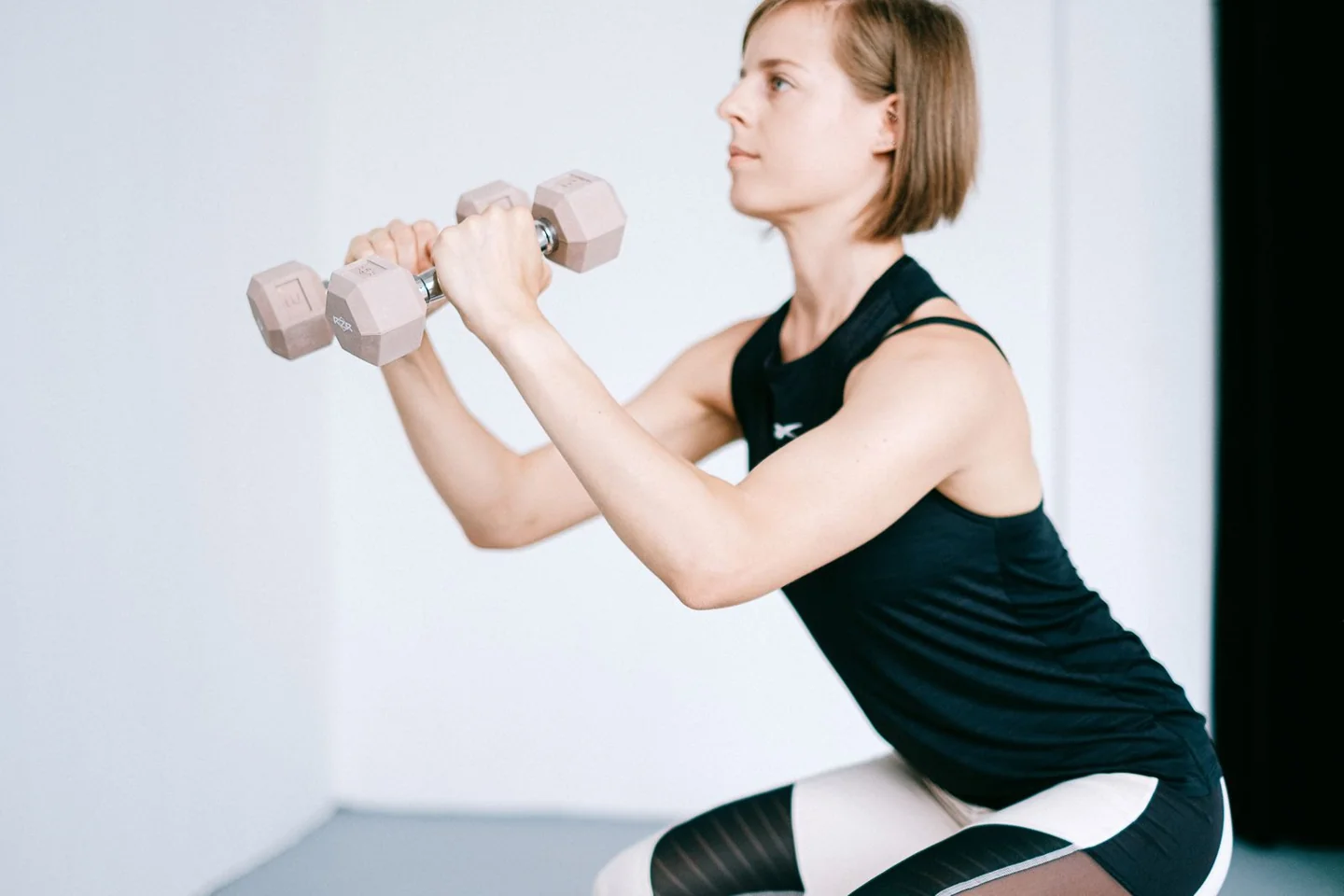
Start with something you’d like to feel stronger doing
Maybe it’s getting up from a low chair, taking the stairs with a laundry basket, or lifting a bag into the overhead bin. Pick something that would make your own day easier. It gives you a reason to come back when you’re still getting the hang of the exercises.
Strength training asks your muscles to work against resistance. That resistance can come from your own body weight, a pair of dumbbells, a band, or a machine. The American College of Sports Medicine’s 2026 review found that home-based and bodyweight training can build strength, too. That gives you a lot of room to start with what fits your life. [1, 2]
Choose where you’d like to learn
At home. A sturdy chair and a wall are enough to practice the first two movements below. If you already have light dumbbells, you can add the optional curl when you feel ready. Two matching, securely capped water bottles will also work for that exercise. Choose a spot where you can move comfortably and keep the instructions in view. [3]
At the gym. Ask if someone can show you how to adjust the seat and resistance on a leg press, seated row, or chest press. Then ask them to watch you do a few easy repetitions. If you’re curious about free weights, ask for the same kind of introduction in the dumbbell area. You can walk out of that first visit knowing how to use one machine or how to pick up and put down a pair of dumbbells comfortably. That’s a good visit. [1, 2]
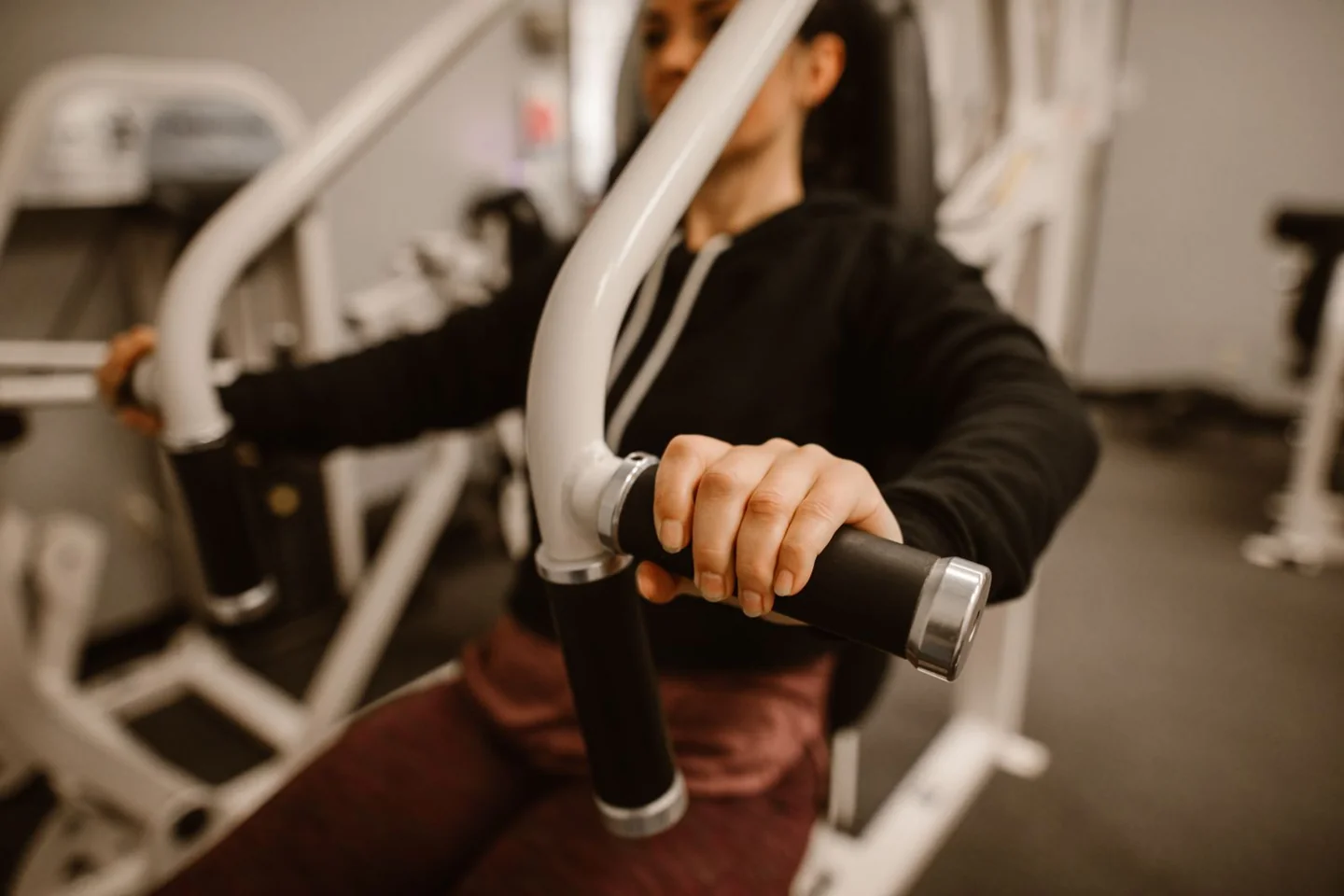
In a class. Look for beginner strength training, an introductory weights class, or Mat Pilates. Before you sign up, ask how the instructor helps someone who wants to go slower, use a lighter weight, or stay off the floor. It’s fine to ask what you’ll need to bring and how much time the class spends getting up and down from the mat.
Where Mat Pilates fits
If you like the idea of learning with an instructor and having time to get the hang of a movement, try a beginner Mat Pilates class. You work through exercises on a mat, often using your body weight and paying attention to how you breathe and move. In a 2026 review of Pilates studies in women, participants improved on a flexibility test that asked them to sit and reach forward. Classes vary, so ask to see what the beginner version actually looks like. [4]
You might enjoy a Mat Pilates class one day and practice with weights another day. If your goal is to lift a heavier suitcase or carry more comfortably, build in exercises you can gradually make more challenging with weights or a machine. The class and the weights can each give you something to look forward to. [1, 2, 4]
Try two movements at home
The first time, do a few slow repetitions of each and rest as needed. Choose a range you can control and keep breathing as you move. You can stop after the chair exercise if that feels like enough for today. [2, 3]
- Sit to stand. Use a sturdy chair that won’t slide. Sit near the front with your feet flat and about hip-width apart. Lean forward a little, stand up, then lower yourself back to the seat slowly. If you need a hand, use a sturdy chair with fixed armrests and give yourself a little push. [3]
- Wall push-up. Face a clear wall and place your palms flat at chest height, about shoulder-width apart. Keep your body in a line as you bend your elbows and bring your chest toward the wall. Press back slowly. Stand closer to the wall if you’d like to make it easier. [3]
- Optional seated curl. Sit tall with a light dumbbell or a securely capped water bottle in each hand. Keep your elbows near your sides, bend them to lift the weights, and lower slowly. Practice the motion with empty hands first if you’d like. [3]
Printable companion · Your First Strength Session has six exercises with photos, easier options, a two-week practice plan, and a tracker.
Download Your First Strength Session (PDF)
Give yourself room to learn. If a movement causes sharp or increasing pain, makes you dizzy, or leaves you unusually short of breath, stop. If you have chest pressure or other possible heart attack symptoms, call 911 in the U.S. or your local emergency number. If you’re returning after surgery or injury, or you’ve been given exercise restrictions, ask your healthcare team what’s appropriate for you before trying the routine. [2, 5]
Make it easy to come back
Once the movements feel familiar, add a repetition or try a slightly heavier weight while you can still move steadily. Change one thing at a time. Over time, the general goal for adults is to work the major muscle groups on at least two days a week. This little session gives you a couple of movements to learn. As you get comfortable, you can add others, including a pulling exercise, so you’re working more of your body. [1, 2, 6]
If you’re deciding what to do this week, make the plan specific enough that you can picture it. “I’ll try the chair and wall exercises after I put the kettle on,” works. So does, “I’ll ask the front desk to show me the leg press.” Pick the first step you’d actually do.